

Make Executive Delivery Feel Natural on Camera
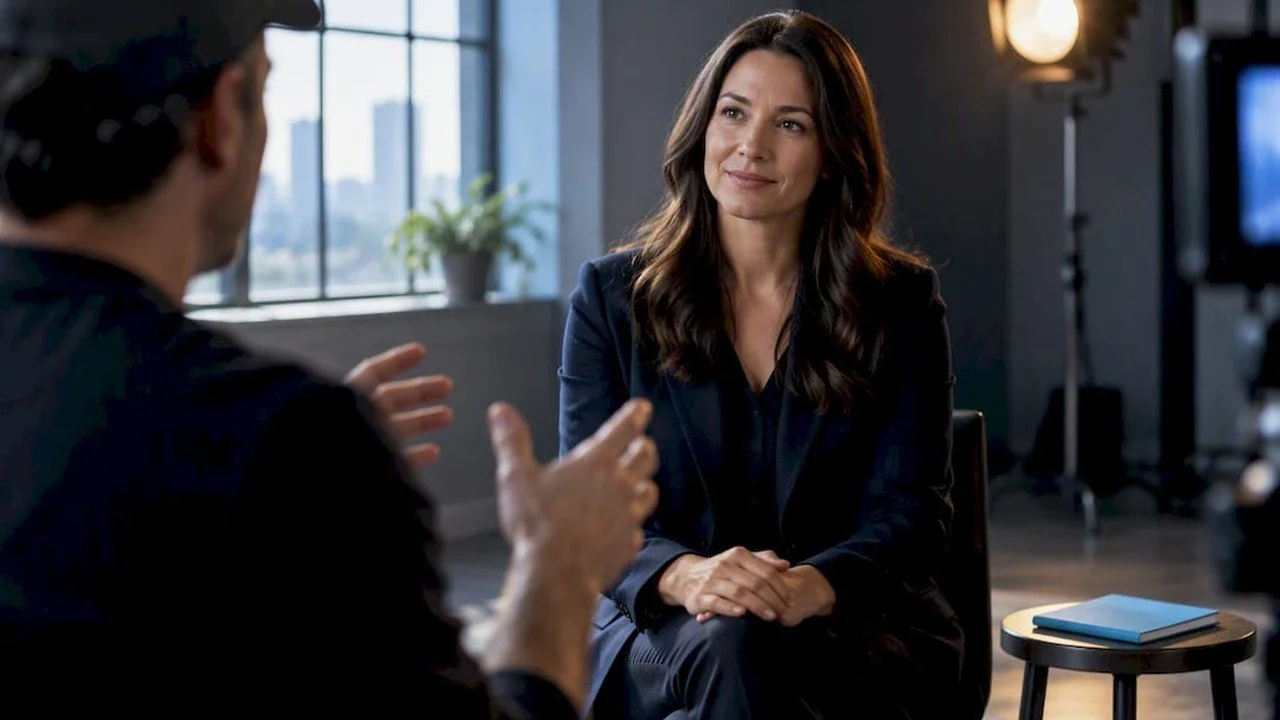
Most executives do not need to become performers before a camera arrives. They need a clear path from what they know to what the audience will see and hear.
When I direct an executive on a Dallas set, I am listening for more than accurate words. I am watching for the pause before an important point, the breath that disappears halfway through a sentence, and the moment a speaker starts reading instead of communicating. Those details determine whether the finished piece feels credible or merely correct.
This is why I treat on-camera direction as part of the filmmaking process from the first script review through the final pickup. The goal is not to manufacture a personality. It is to remove the obstacles that keep a capable leader from sounding like themselves.
Start with language an executive can actually say
Many scripts arrive written for the page. They contain long sentences, stacked qualifications, and transitions that work in a memo but collapse when spoken aloud. I mark those friction points before the shoot and reshape them around the speaker’s natural vocabulary.
I also look for the sentence that carries the real idea. If a paragraph contains three messages, I separate them. That gives the executive room to land each thought and gives me cleaner edit points later.
For a technology leader, that might mean replacing a dense explanation with one specific customer outcome. For a founder, it could mean turning a polished brand statement into a direct explanation of why the company exists. The language changes by person, but the principle stays the same: spoken copy should give the speaker something clear to mean.
Use rehearsal to find the person, not just the mistakes
I do not use rehearsal as a pass-fail test. The first read tells me how the executive thinks, where they naturally pause, and which words they emphasize without prompting. That information is more useful than asking for an artificial “more energy” performance.
On a typical coached setup, I let the speaker read through the material once without interrupting every imperfect phrase. Then I address the highest-impact adjustment. It may be a shorter opening, a slower final sentence, or a reminder to finish the thought before looking down.
Small changes usually outperform broad direction. “Be more confident” is difficult to apply. “Take a breath before the answer and let the last word finish” gives the speaker a physical action they can repeat.
A teleprompter should support thought, not replace it
A teleprompter is useful when the message must be precise, but it can expose weak writing and poor pacing immediately. I format lines around breath and meaning rather than filling the screen with dense blocks of text. I also test the scroll speed with the actual speaker, because a pace that feels comfortable to one executive can make another rush.
My direction changes when the prompter is involved. I may ask the executive to glance through a phrase before delivering it, or to hold eye contact through the end of an idea instead of chasing the next line. The result should feel like communication with a person, not visual recitation.
For messages that need a more conversational quality, I sometimes use short prompts instead of a complete script. That approach works well for interviews, founder stories, and internal leadership pieces when the executive understands the subject deeply and the language does not require exact compliance wording.
Direct the space around the speaker
Performance is affected by the physical setup. An executive who is uncomfortable in a chair, distracted by a monitor, or unsure where to look will spend attention on the room instead of the message.
As a Dallas cinematographer, I build the frame and eye line around the intended audience. A direct-to-camera message needs a different relationship with the lens than an interview addressed to an off-camera listener. I explain that distinction before rolling so the speaker is not guessing during the take.
I also pay attention to sound and wardrobe because technical distractions become performance distractions. A noisy jacket, an unreliable microphone, or a pattern that pulls attention toward the shirt can make a speaker less settled. Solving those issues early protects the executive’s concentration once the important take begins.
Make retakes specific and useful
When a take misses, I avoid sending the executive back through everything unless the entire thought needs rebuilding. I identify the exact issue: a skipped phrase, an unclear name, a rushed conclusion, or a change in emphasis. Then I give one adjustment and roll again.
This keeps the room calm and creates a usable set of options. A marketing lead may need one clean full statement, a shorter version for social, and an alternate opening for a campaign edit. I can often capture those variations efficiently by changing one element at a time instead of asking for endless identical performances.
- First, I protect the meaning of the message.
- Next, I refine pace, emphasis, and eye line.
- Finally, I capture targeted alternatives that support the edit.
The best retake is not always the most polished one. Sometimes the strongest version contains a natural pause or a slight change in expression that makes the executive feel present. I want enough control to protect the message without sanding away the person delivering it.
Plan the shoot around the executive’s real constraints
Senior leaders often have limited time and several competing responsibilities. I ask about their schedule, subject comfort, approval requirements, and likely points of hesitation before I design the filming plan. That lets me place demanding material when attention is highest and group simpler pickups together.
I also ask the marketing lead to separate essential lines from useful extras. If the schedule changes, the core message remains protected. If the executive is comfortable and time opens up, I can build additional answers, cutdowns, or alternate introductions without losing the original purpose.
When someone is comparing a Dallas videographer with a larger Dallas videography company, I recommend asking how the director will work with the speaker, not only how the finished image will look. A strong camera package cannot rescue unclear direction. The relationship between script, room, lens, and performance is what makes the footage usable.
That process is central to my work as a Dallas commercial director. I stay close to the message and the person delivering it, whether I am guiding a polished brand statement, a leadership interview, or a concise internal announcement. You can also see how I approach different assignments on my reel.
Give the executive a clear way into the frame
On-camera confidence rarely arrives through pressure. It comes from preparation that respects how the person actually speaks, direction that can be applied immediately, and a set where each retake has a reason.
If you are planning an executive message in Dallas–Fort Worth, talk with me about the project. I can help you shape the script, plan the shoot, and create the conditions for a performance that feels direct, credible, and genuinely yours.

Alex Kinter is a film and commercial director with over 17 years of experience. He has directed for major brands like Hublot, AT&T, and Mercedes-Benz, and has earned recognition and accolades at international film festivals. Alex's unique approach to storytelling will elevate your brand and connect with your audience. Contact us today and book Alex for your next project here.