

The Production Brief That Protects Your Shoot
A video project rarely gets difficult because the camera cannot handle it. It gets difficult when the creative target, filming plan, and approval process are still unclear after the shoot has been scheduled.
When I direct a commercial, I want to understand what the video must accomplish before I decide how to film it. A polished image matters, but it has to serve a business objective. A launch film, recruiting piece, customer story, and paid social spot each demand different choices in casting, locations, pacing, sound, and post-production.
That is why I treat the brief as a production tool rather than an administrative form. A useful brief gives me enough information to protect the idea while identifying the decisions that will shape the work.
Start with the job the video must do
The first question I ask is not, “How long should the video be?” I ask, “What should the viewer understand, feel, or do afterward?”
That answer affects nearly every creative choice. A recruiting film may need authentic employee voices and a strong sense of place. A product commercial may need controlled lighting, precise art direction, and several versions for different placements. An executive message may depend more on credible performance and clean sound than on elaborate camera movement.
I also want to know who the audience is and where the finished piece will appear. A video built for a landing page may need a clear opening before the viewer has sound. A vertical social version may require a different composition rather than a simple crop. If I know this before production, I can frame and record with the final use in mind.
Define the creative shape before the call sheet
A reference video can communicate more than a page of adjectives. Share examples that show the tone, interview style, lighting, edit rhythm, or level of visual detail you want. I use those references to separate what is essential from what is merely attractive.
Then identify the parts of the story that cannot be lost. For an interview-led piece, that may be one central message and a few proof points. For a commercial, it may be a product action, a brand behavior, or a memorable final image. When the priority is clear, I can build the shoot around it instead of collecting disconnected footage.
This is where a Dallas commercial director earns value before the cameras roll. Strong direction is not just performance work on set. It is translating a business goal into a sequence of decisions that the crew, talent, and editor can all follow.
List the practical variables that change the plan
A short paragraph about locations is not enough. I need to know whether the shoot happens in an office, warehouse, home, street, studio, or several of those places. I need to understand access hours, parking, sound conditions, power, company activity, and whether the space can be altered.
The same applies to people. List the number of interview subjects, performers, employees, customers, and background participants. Mention who is available on which date and who requires special direction or accommodations. A crowded schedule can reduce usable time even when the filming day looks generous on paper.
For Dallas–Fort Worth projects, travel between locations can also change the rhythm of a day. A location that looks close on a map may involve load-in restrictions, security check-in, or a long move between setups. I would rather solve those issues during planning than discover them while a key subject is waiting.
- Locations, access windows, parking, and restrictions
- Interview subjects, performers, and availability
- Required visual moments, products, props, and wardrobe
- Music, graphics, captions, and language versions
- Launch date, review owners, and final destinations
Think in deliverables, not just one master file
One finished video often becomes a family of assets. A campaign may need a primary edit, short cutdowns, vertical versions, square exports, captioned files, still frames, or alternate openings. Each version can affect how I shoot, organize the edit, record clean transitions, and protect space for text.
Put every intended output into the brief. Include aspect ratio, approximate duration, platform, language, captions, and whether the piece will run organically or as paid media. Usage matters too. Talent, music, locations, and archival material may carry different permissions depending on where the work appears and how long it remains active.
As a Dallas cinematographer, I often make framing decisions that are invisible in the final master but critical to later versions. A subject positioned too close to one edge may work beautifully in widescreen and fail completely in vertical. Planning the asset family early gives me room to capture footage that survives those changes.
Build approvals into the creative process
Many revisions begin before anyone opens the edit. They begin when no one has agreed on who can approve the message, what feedback should address, or when stakeholders will review it.
Choose one person to consolidate comments whenever possible. Separate factual corrections from personal preferences, and decide which stages require review. I usually find that a clear script or outline approval prevents larger changes later, because everyone has agreed on the story before time is spent refining the cut.
Set a realistic launch date and work backward from it. Account for location access, casting, filming, editing, sound, color, captions, legal review, and final exports. A rushed finish can affect both creative judgment and technical quality, especially when several versions are needed.
Use the brief to compare scope, not promises
When reviewing proposals, compare what each one actually includes. Look for the planned pre-production, crew roles, equipment approach, filming days, locations, post-production stages, deliverables, revision process, and rights. A single total tells me very little if the assumptions underneath it are different.
I also want unclear phrases resolved before production begins. “Standard edit,” “graphics as needed,” and “final revisions” can mean different things to different people. A good proposal turns those phrases into specific checkpoints and outputs.
My job as a Dallas videographer is not to make a brief sound more complicated than it is. It is to identify the choices that will affect the result, then recommend the simplest production approach that can deliver the intended message. Sometimes that means concentrating the shoot in one location. Sometimes it means adding a dedicated sound recordist, a second camera, or more time for art direction. The right choice depends on the story, not a preset package.
Make the first conversation productive
You do not need a finished script before discussing a project. Bring the business objective, audience, references, known locations, expected outputs, and timing. I can help test the idea against the practical realities of production and shape the next decisions.
You can see my reel for examples of how I approach commercial images and performance. If the project is centered on interviews, culture, or internal communication, my corporate video work may be a useful comparison.
Bring me the problem behind the video
If you are planning a Dallas–Fort Worth project, talk with me about it. I will help you turn the objective, audience, locations, and deliverables into a production plan that the shoot can actually support.
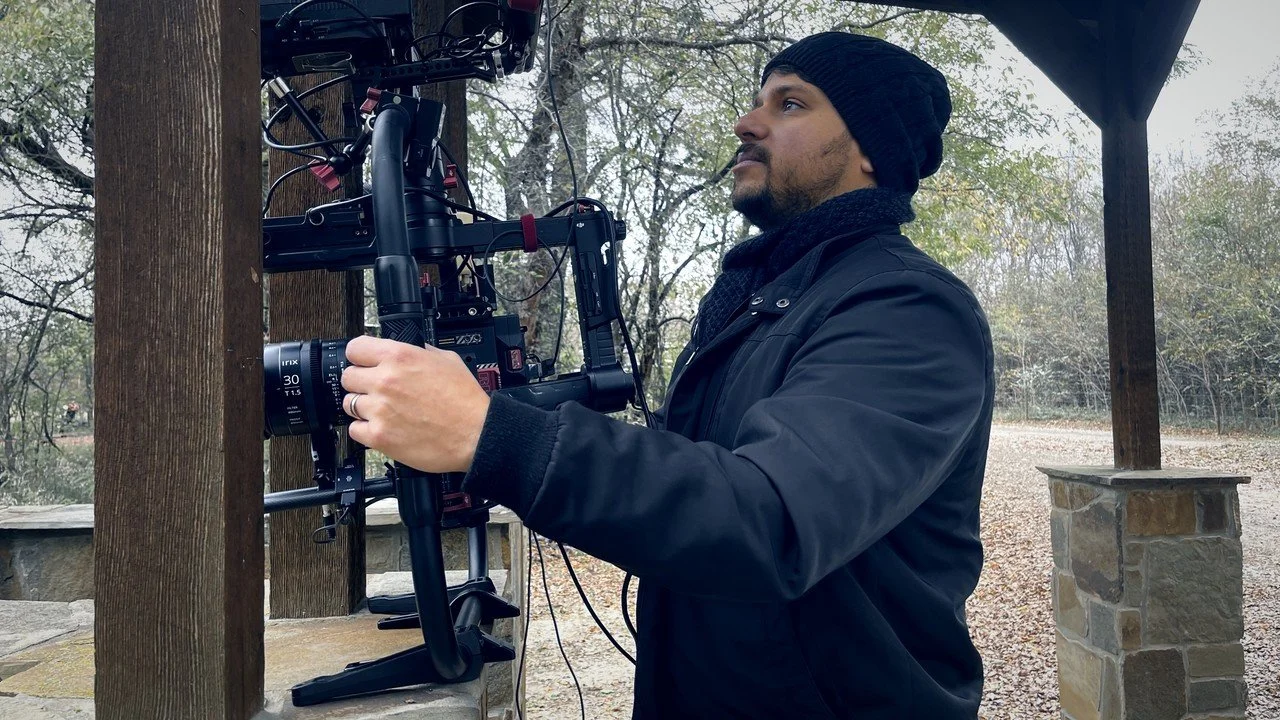

Alex Kinter is a film and commercial director with over 17 years of experience. He has directed for major brands like Hublot, AT&T, and Mercedes-Benz, and has earned recognition and accolades at international film festivals. Alex's unique approach to storytelling will elevate your brand and connect with your audience. Contact us today and book Alex for your next project here.