

Make Your Commercial Easy to Approve

A commercial can be creatively finished and still be nowhere near ready for air. I have seen strong concepts lose momentum because a music release was missing, a performance claim had no supporting evidence, or the final file failed a technical check. Those are not problems to discover after the edit is locked.
When I direct a commercial for a Dallas–Fort Worth brand, I treat approval as part of the creative process. The goal is not to make the work cautious or generic. The goal is to protect the idea while identifying the proof, permissions, and delivery details that allow it to move through review without an avoidable stop.
If your spot is headed to broadcast, cable, connected television, or a regional media schedule, the same principle applies: decide what must be demonstrated, documented, and delivered before the shoot begins.
Start with the claims, not the camera
The first clearance question is often simple: what exactly is the commercial asking the audience to believe? Statements about performance, safety, savings, speed, durability, or superiority need support that matches the wording and the finished visuals.
I ask marketing leads to mark every claim in the script and identify its source. A product test, certification, clinical document, internal study, or customer statement may support different kinds of language. A broad promise cannot always be defended by narrow evidence.
This review also catches visual claims. A before-and-after image, a chart, a demonstrable product result, or a comparison with another option may create obligations even when the voiceover sounds restrained. I would rather revise a line during script development than rebuild a scene after filming.
Build a clearance folder before the shoot
Paperwork is easiest to manage when it is assembled as the creative develops. I keep the approval materials connected to the project rather than treating them as a post-production chore.
- Approved script, storyboard, supers, and any alternate language
- Evidence supporting product, performance, safety, or comparative claims
- Talent, location, music, artwork, product, and archival rights
- Disclosure language for paid relationships, endorsements, or testimonials
- Media destination, version lengths, captions, and delivery contacts
Having these items in one organized packet gives everyone a shared reference. It also makes revision requests more precise. Instead of debating whether a statement is safe in the abstract, I can point to the specific proof, release, or disclosure that governs the shot.
For a Dallas videographer, this preparation is especially useful when a campaign includes local locations, recognizable businesses, employees, or customer stories. A location that looks perfect on camera still needs permission for the intended use. A real employee still needs an agreement that covers the campaign’s channels and duration.
Use review checkpoints to protect the schedule
I do not wait until the final master to ask whether an idea can clear. The most efficient process has checkpoints at moments when changes are still manageable.
Before filming, I review the script, storyboard, claims, disclosures, and any sensitive category issues. During the edit, I compare the rough cut with that approved direction. At delivery, I verify that the finished master, caption file, slate, metadata, and supporting documents belong together.
Each network, station group, cable outlet, or platform may interpret its requirements differently. Approval in one place is not a universal pass. If the same spot is scheduled across several destinations, I map those submissions separately and leave room for questions or alternate versions.
I also confirm the actual handoff path. A complete file sent to the wrong portal or contact can sit untouched while the launch date approaches. The person managing the media schedule should know who owns each review and which response is required at every stage.
Keep technical delivery in the creative conversation
Technical compliance is not glamorous, but it is part of the audience experience. A commercial can pass a content review and still be returned because of loudness, captions, file structure, codec, slate, or metadata issues.
My finishing checklist includes a measured audio pass, accurate captions, clean legal text, correct duration, and the destination’s current master specifications. I do not assume that a general broadcast export will satisfy every outlet. The receiving organization may require its own container, naming convention, slate fields, or upload procedure.
Captions deserve special attention. They need to reflect the spoken words, remain readable at the intended speed, and account for important audio information. Legal supers also need a practical viewing test; text that technically appears but cannot be read is not a successful solution.
When I work as a Dallas cinematographer, I am thinking about these constraints while designing the images. If a required disclosure will occupy part of the frame, I plan composition and lighting around it. If the product demonstration depends on readable detail, I protect that detail rather than burying it beneath fast cutting or decorative graphics.
Know when the category needs extra scrutiny
Some campaigns deserve specialist review before production is scheduled. Pharmaceutical advertising, financial promises, political messaging, children’s programming, health claims, and influencer-led testimonials can carry requirements that affect the script, edit, disclosures, and media plan.
For prescription products, required risk information can influence both spoken language and on-screen treatment. Political work may require sponsorship identification and station-level records. Advertising aimed at children has distinct timing and separation considerations. AI-generated imagery or altered performances may introduce disclosure questions that should be addressed before anyone captures or creates the material.
I am not a substitute for advertising counsel or regulatory specialists. My role is to make sure those questions reach the right people early and that the resulting guidance is reflected in the production plan. A Dallas commercial director should know when a creative decision needs legal input rather than trying to solve a regulatory question alone.
What I check before final delivery
Before I call a commercial finished, I run a practical handoff review. I look for gaps that are easy to miss when attention is focused on the final picture.
- Does every material claim have support that matches the exact wording?
- Are all people, locations, music, artwork, products, and third-party materials cleared for the planned use?
- Are disclosures and legal supers present, accurate, and readable?
- Does the master meet the destination’s audio, caption, file, slate, and metadata requirements?
- Have alternate lengths, aspect ratios, language versions, and platform deliveries been identified?
- Is the complete submission packet labeled so a reviewer can understand it without chasing missing pieces?
This review is not about adding bureaucracy. It is about preserving momentum. When the paperwork and master are ready together, a reviewer can evaluate the commercial instead of pausing it to request basic information.
Let’s make the approval path part of the concept
If you are planning a commercial in Dallas–Fort Worth, talk with me about the project before the script is locked. I can help connect the creative idea, the shoot plan, and the delivery requirements so the finished work is built to move forward.
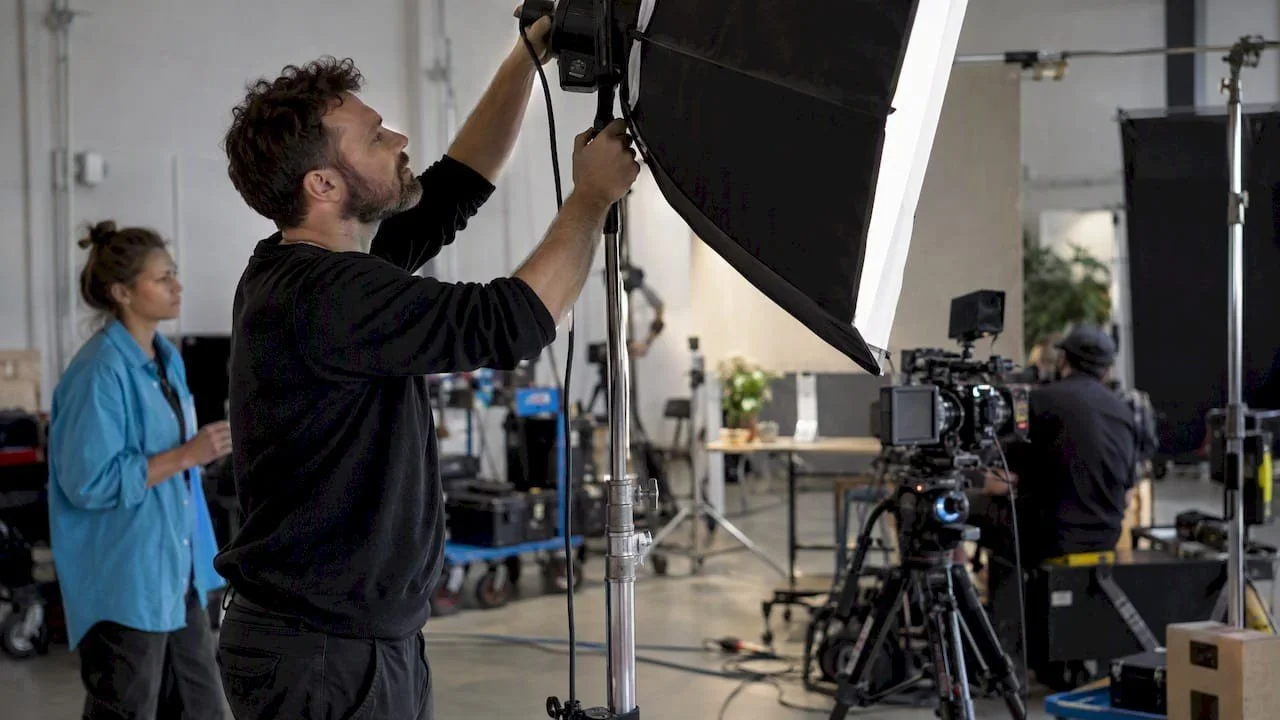
Alex Kinter is a film and commercial director with over 17 years of experience. He has directed for major brands like Hublot, AT&T, and Mercedes-Benz, and has earned recognition and accolades at international film festivals. Alex's unique approach to storytelling will elevate your brand and connect with your audience. Contact us today and book Alex for your next project here.