

Make Your Dallas Event Footage Work Harder
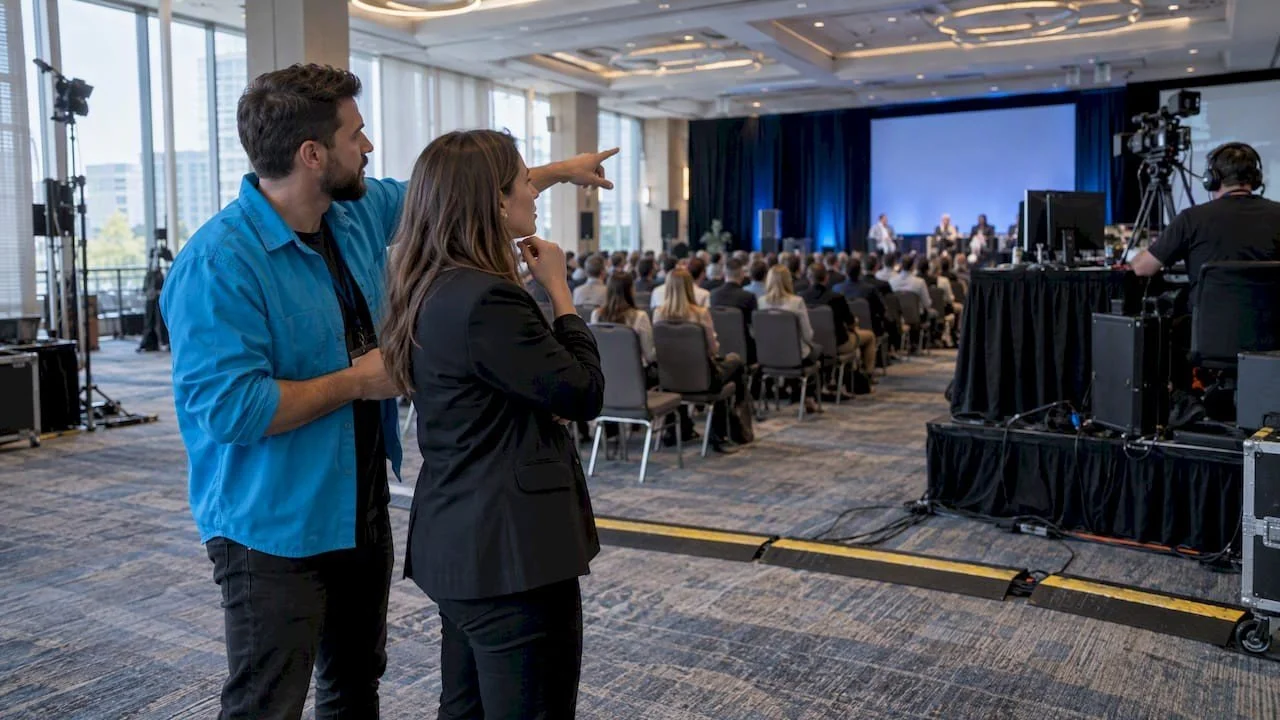
Event footage is easy to overbuild and surprisingly easy to under-plan. I have seen marketing teams focus on camera counts while overlooking the decisions that determine whether the finished material is actually useful: clean sound, clear priorities, reliable coverage, and a post-production plan.
When I direct an event in Dallas–Fort Worth, I start with the audience and the intended use. Is the footage supporting a sales follow-up, extending a conference to people who could not attend, documenting a leadership message, or creating short-form content for several months? The answer shapes the shoot more than the size of the venue.
That is the difference between recording an event and creating a library of usable marketing assets. A thoughtful plan can make a modest setup feel intentional, while an elaborate setup can produce footage nobody knows how to use.
Begin with the moments that carry the message
Before I think about lenses or additional angles, I ask what must be captured without compromise. It may be a keynote, a customer panel, a product demonstration, audience reactions, sponsor visibility, or informal conversations between sessions.
I turn those priorities into a coverage map. That map tells me where I need to be, when I need to be there, and which moments can be treated as supporting material. Without it, event filming becomes reactive. The crew chases whatever is happening nearby, while the most important story can receive inconsistent attention.
A marketing lead can make this process easier by marking the non-negotiable moments in the run of show. Session titles alone are not enough. I also need to know which speakers matter most, which branding must appear, and what content will be reused after the event.
Sound is the first technical conversation
Visual variety attracts attention, but poor sound ends usefulness quickly. A beautiful keynote recording with room echo, HVAC noise, or an uneven panel mix is difficult to watch and costly to rescue in post.
At the venue, I want to understand the house audio system, the available outputs, the microphone plan, and the relationship between the stage and the recording position. I may combine a feed from the audio console with isolated microphone capture so that the edit has options if the room changes or a feed becomes unreliable.
This is one reason I do not treat an audio specialist as an optional upgrade on a complicated event. Someone needs to monitor the mix, identify interference, protect speaker intelligibility, and keep an eye on what is happening beyond the camera frame. More lenses cannot compensate for a sentence that disappears under crowd noise.
Choose coverage based on editorial needs
Additional cameras are useful when they solve a specific storytelling problem. A panel may benefit from a wide master, a speaker angle, and audience responses. A product reveal may need movement and close detail. A single presentation intended for internal reference may require far less visual variation.
I make that decision by considering the final edit, not by treating camera count as a status symbol. More angles create more synchronization, media management, operator coordination, and editorial choices. If the finished piece only needs one stable presentation, extra coverage can add complexity without adding meaning.
My approach as a Dallas commercial director is to build the smallest setup that protects the story and the deliverables. That can still involve multiple cameras, but every position has a job.
Account for the parts audiences never see
Event filming involves more than the time spent on stage. Load-in, lighting changes, room access, security procedures, cable paths, media checks, and schedule transitions all affect how smoothly the day runs.
Large programs may also require someone dedicated to organizing and safeguarding media while filming continues. Cards need to be labeled, copied, verified, and tracked. If several rooms or stages are active, that discipline becomes essential. Losing a critical presentation is not a post-production inconvenience; it is a missed opportunity that cannot be recreated.
Streaming or recording a program for remote viewers adds another layer. The plan may need backup signal paths, presenter checks, screen-content capture, and coordination with the venue’s technical director. I want those responsibilities identified before the event rather than discovered during the opening remarks.
- Confirm room access, load-in timing, and restrictions before the shoot day.
- Identify the person responsible for the house audio feed and screen content.
- Mark the sessions, people, products, and branding that cannot be missed.
- Decide how footage will be backed up and named while filming is underway.
Let the deliverables determine the edit plan
“Capture everything” sounds safe, but it often creates an unfocused post-production process. I prefer to define the outputs early: a concise recap, complete session recordings, speaker clips, social cutdowns, recruitment material, or a collection of evergreen interviews.
Each format asks for different coverage. A recap needs energy, transitions, atmosphere, and concise quotes. A full session edit needs continuity and dependable audio. Short clips need strong statements that can stand alone. When those needs are known in advance, I can direct interviews and supporting scenes with the final audience in mind.
I also ask where the footage will live and who will approve it. A marketing department building a campaign needs a different edit structure from an internal communications team archiving a conference. The goal is not to request every possible version. The goal is to create the versions that will genuinely be published.
Questions I ask before accepting an event shoot
When I speak with a prospective client, I want a practical picture of the event rather than a generic request for “coverage.” The following details usually reveal the real scope:
- What should the viewer understand, feel, or do after watching?
- Which sessions and people are essential?
- Will the venue provide audio, screens, lighting, or technical support?
- Are there simultaneous rooms, remote presenters, or live audience interactions?
- Which final edits are needed first, and which can follow later?
- What approvals, releases, or brand requirements could affect the schedule?
Those answers let me recommend a sensible approach instead of forcing the event into a preset package. They also help a Dallas videography company—or an independent Dallas videographer like me—prepare for the actual conditions of the assignment.
Build the plan around usefulness
The strongest event footage begins with a clear editorial purpose. I would rather protect the keynote audio, capture meaningful interactions, and deliver a focused set of edits than create a large volume of disconnected material.
If you are planning an event in North Texas, you can review my reel or learn more about how I approach directing. I can help you decide what the shoot needs to accomplish before the schedule locks.
Talk through your event
Tell me what you are planning, who needs to see it, and how the footage will be used. Contact me to discuss the right filming approach for your event.
Alex Kinter is a film and commercial director with over 17 years of experience. He has directed for major brands like Hublot, AT&T, and Mercedes-Benz, and has earned recognition and accolades at international film festivals. Alex's unique approach to storytelling will elevate your brand and connect with your audience. Contact us today and book Alex for your next project here.